PO Box 1212
Tampa, FL 33601

Pinellas
(727) 726-8811
Hillsborough
(813) 258-5827
Toll Free 1-888-683-7538
Fax (813) 258-5902

TOOLS
CONVERSION CHART
STANDARD DEVIATION
DISCOUNTED CASH FLOW
MORTGAGE CALCULATOR

Updated January 2010


Narrative Appraisals

RETURN TO INTRODUCTION

In recent years there have been a number of questions raised about what appraisal reports are to contain. For appraisers specializing in residential real estate the answer is provided by various form reports - both the appraiser and the client know which form is appropriate to the assignment and the work proceeds accordingly.

For commercial, industrial, and special purpose appraisals, such as the type our company provides, resolution of the report format is more difficult. Many appraisers and virtually all of the clients are confused by the allowable formats. Clients are confused because they get conflicting information from different appraisers - and appraisers are confused because the regulatory agencies change the rules at least every two year's.

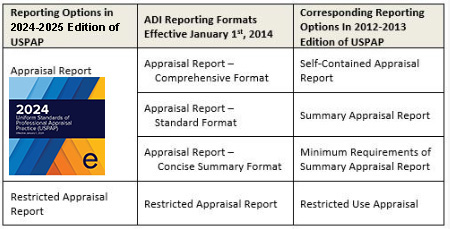
Today, the substance of an appraisal report is dictated by the "scope of work" agreed upon between the appraiser and client. Then, the format of the report can be addressed in one of three ways: a restricted report, a summary report or a self-contained report.

The 2010-2011 edition of USPAP (Uniform Standards of Professional Appraisal Practice) now requires all appraisers to state to their clients prior to taking on an asignment, and within the report - if they have appraised the subject before, or provided any type of consultantcy work on the subject for previous or prospective interested parties - within the past three years.

The 2008/09 Edition of USPAP reflected extensive changes from previous years resulting from the Appraisal Standards Board (ASB) examination of the proper role of the scope of work and departure concepts in the appraisal process. The following FAQ provides answers from the ASB regarding some of the most common questions about these changes.

Our experience is that the great majority of clients want either a restricted report or a summary report. The basic difference between these two types of reports is that in a restricted report there is very minimal information - basically, just a value. A summary report, on the other hand, provides information allowing the client to get a feel for how the value was developed. There is a third type of report format - a self-contained report, but the need for that type of report is usually limited to financial institutions requiring extensive analyses to support a loan in enterprenural projects.

Clients wanting more than just a value (the restricted report format) have varying needs. Some just want a brief overview of the local market and others want to know considerable detail. Both of types of clients can be served with a summary report. Summary reports can be either simple or complex.

While the property value reported does not change from report format to report format, the appraisal fee does tend to change. More writing takes time and ultimately time costs money.

RETURN TO INTRODUCTION


| INTRO | FAQ | RESIDENTIAL | COMMERCIAL | NEWS | RESOURCES | TOOLS | TEAM | CONTACT | CLIENTS LOGIN | PRIVACY |
Copyright 1999-2010, Appraisal Development International, Inc