|
|
            |
|
PO Box 1212 Tampa, FL 33601 Pinellas Updated November 2024
|
|
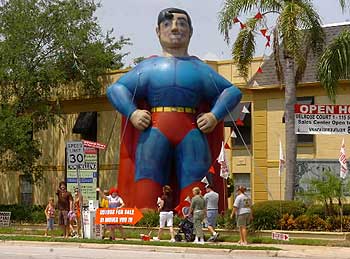
RETURN TO NEWS INDEX Condos Switch Back To Rentals TAMPA - In March, Russell Patterson bought a one-bedroom unit in the apartment-to-condominium conversion complex Oxford Place at Tampa Palms. He chose the development because the units were priced right, he said, and he thought it would become a sought-after place for young professionals. He planned to rent it out and sell for a profit when the conversion was complete. Now, the developer has decided to turn the units it hasn't sold - about 180 - back into apartments. The rents on those units are less than the $995 a month Patterson needs to charge to pay his mortgage and homeowner's association fees. Even more frustrating, he said, his contract forbids him to sell his unit before the developer sells all of its own. "I'm stuck, and this complex is not what I was sold," Patterson said. "If I had known part of it would stay an apartment complex, I wouldn't have bought here." The condominium conversion business has been white-hot in the Tampa Bay area, with more than 28,000 apartment units sold as condos in the past two years. As mortgage interest rates edge up, however, fewer people are buying homes. And the droves of investors that helped fund conversions no longer flock to such projects. As a result, nearly every converted apartment property has empty units, and some developers are changing course and renting units instead to keep from losing money or being forced into foreclosure. Some are taking drastic measures to compete with other condo sellers, a move that leaves people who purchased an apartment feeling trapped and fearing their property values will go down. "I'm not crazy about this. ... We'd rather have owners" in the complex, said Matt Carter, who bought a two-bedroom converted condo in New Tampa. "At the same time, though, owners are renting out, too, so I guess this is going to happen one way or another." New York-based Real Capitol Analytics Inc., which tracks real estate trends, reports 68 apartment complexes were purchased for conversion in the Bay area in 2005, and 23 have been bought this year. "That's surprising," company spokesman Dan Fasuel said. "The conversion game is over. There is a lot of unsold product, and developers are wanting to get out. Some of these guys may face foreclosure." Even so, some developers are still trying to get in on what used to be thought of as fairly easy money. They're just having to be more creative. Melrose Court in south Tampa is using mimes, clowns and inflatable superheroes to attract buyers' attention, said Cindy Corrales, the sales director. "There are so many condo conversions going on right now, we're trying to stand out," Corrales said. It has paid off, she said, noting that the complex is 70 percent sold out. Other developers offer free upgrades, a year of paid condo and homeowner's association dues, and rent-to-own programs. New York-based Tarragon Corp. has converted 30 complexes in Florida and is looking for more properties, said Tony Martin, the company's executive vice president. Tarragon bought and converted four complexes in Tampa - Oxford Place at Tampa Palms, The Quarter at Ybor, Vista Grande and Cordoba Beach Park. All have vacancies, and the company has decided to keep units at all four as rentals for now. Martin said he understands that previous buyers fear the new business plan will cause property values to drop. But that won't happen, he said. "We help investors set their rates by renting our units for market rate." Converters who can't afford to hold on to their properties and lack rental experience may be forced to lower prices, he said. Tarragon's strategy is to rent instead. The company also offers rent-to-own programs, in which a portion of a tenant's rent is set aside for a down payment on the unit. There is a glut of converted apartments, Martin said, because too many developers jumped in on the condo craze and chose some complexes that shouldn't be condos because of location or quality. However, there is still a market for condos in prime locations, such as near downtown Tampa, he said. When the real estate market strengthens again, Martin said, Tarragon's condos will be in demand. "It's a tough business today," he said. "I don't think anybody predicted this." In the meantime, he said, "true converters try to manage their way through these types of markets." Ron Williams, a real estate agent with Keller Williams, said condo buyers are sometimes shocked when they learn rental units will remain at their complex. Most converters warn of the chance of this scenario in the condo association documents, which tend to be 1,000 pages or more, "but you can't find a client that's read their docs," Williams said. Some banks require a percentage of contracts before funding a conversion. As a result, some developers are delaying closings until they make their percentage. For a buyer, waiting to close on the property could mean they will have to move twice, Williams said. In this situation, a buyer moves in as a renter until the closing date. If the developer decides not to go through with the deal, the buyer can continue to rent or move out. Lenders are growing more cautious of funding conversion deals, and some are restricting the number of investor buyers, said Bob Saltzman, area manager for National City Mortgage. "We were careful not to get too involved in this trend because we saw this coming," he said. Fitch Ratings, a New York financial analysis company, predicted last year that 10 percent of loans made to condo converters in 2005 would default. There are still some developers who maintain that Tampa is a great location for conversion investing. Eli Riesel, of ABBA Group, a conversion company based in Miami, said: "Tampa is the last big city in Florida that hasn't had its prices inflated. It's the last good place for conversion." In the past year, the company has purchased eight apartment complexes for conversion. It is selling units in three, and Riesel says the first phases have sold out. He said he is aware of other developers' troubles, but that conversions can still work. "Some others are trying to depend on end users, and you can't do that right now," Riesel said. "It would take too long to sell. We have good contacts of investors from all over the world - Russia, England." Those investors could end up helping Bay area renters who are grappling with rising rental rates, said Bernard Markstein, director of forecasting for the National Association of Home Builders. The conversions led to a reduction of 18,000 rental units in 2005 and an occupancy rate of 98 percent, according to the commercial real estate firm Cushman & Wakefield. The result is predictable. Apartment rents have soared dramatically, rising $200 to $300 a month for some renters this year. Because many of these investors will be renting out their units, Markstein said, the inventory will swell again, and competition will force rental rates down. "Real estate is cyclical," Markstein said. "This is the way it works." Reporter Shannon Behnken can be reached at (813) 259-7804 or sbehnken@tampatrib.com. |


| INTRO | FAQ | RESIDENTIAL | COMMERCIAL | NEWS | RESOURCES | TOOLS | TEAM | CONTACT | CLIENTS LOGIN | PRIVACY | |
|


